

 comments
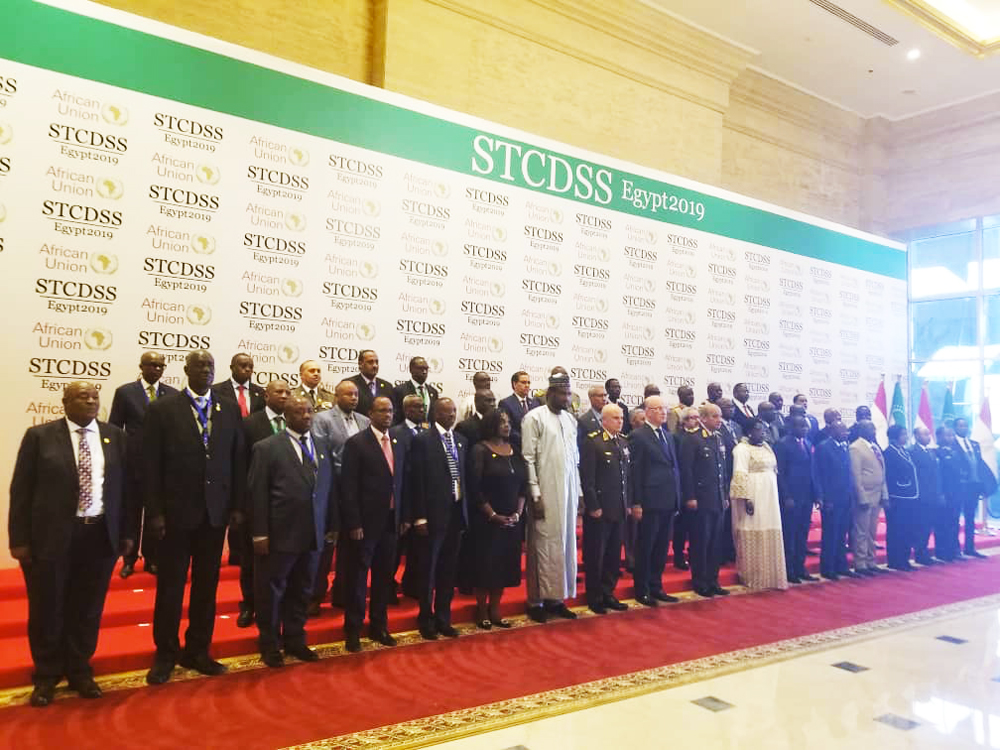
The African Union Commission, through the Office of the Special Envoy on Women, Peace and Security (OSE-WPS) and the Office of the AU Special Envoy for Children Affected by Armed Conflict (CAAC), convened a high-level policy dialogue on 27 October 2026 at the African Union Permanent Observer Mission to the United Nations in New York, calling for legal identity to be recognised as a fundamental right and a gateway to protection for women and children affected by armed conflict.
Held during Women, Peace and Security (WPS) Week, marking 26 years since the adoption of United Nations Security Council Resolution 1325, the dialogue, titled “From Legal Invisibility to Protection: Strengthening Legal Identity and Protection for Women and Children Affected by Armed Conflict”, explored how the WPS and CAAC agendas can be advanced together through integrated systems of legal identity, protection and inclusion.
Participants noted that conflict and displacement often lead to the loss, destruction or absence of civil documentation, cutting women and children off from education, healthcare, humanitarian assistance, justice and social protection. For children, the absence of birth registration can create lasting barriers to nationality, essential services and the exercise of their rights. The dialogue also highlighted the role of women peacebuilders, women-led organisations and community actors in early warning, mediation, family tracing, reintegration and reconciliation, and how their work can be better connected to formal WPS, CAAC and child-protection mechanisms.
Welcoming participants, H.E. Ambassador Mohamed Fathi Ahmed Edrees, Permanent Representative of the African Union Permanent Observer Mission to the United Nations, underscored that legal identity is not merely an administrative requirement but a foundation for dignity, safety, belonging and access to rights. He reaffirmed the African Union’s commitment to protecting women and children affected by armed conflict and welcomed the dialogue as an opportunity to strengthen synergies between the two agendas.
“A child without documentation must never become a child without rights, and no woman or child should become invisible because of conflict.” – H.E. Ambassador Mohamed Fathi Ahmed Edrees
H.E. Ambassador Liberata Mulamula, Special Envoy of the Chairperson of the African Union Commission on Women, Peace and Security, spoke of the lasting impact of armed conflict on women and children, including barriers to documentation, access to basic rights, exclusion and stigma. Drawing on the Office’s solidarity missions to Sudan, South Sudan, the Democratic Republic of the Congo and Mali, she highlighted the resilience of women and stressed that the protection of women and the protection of children must go hand in hand.
“As we look ahead, let us imagine an Africa where every woman enjoys equal rights and fully participates in shaping peace and security. An Africa where every child is recognised before the law, regardless of parentage, place of birth or circumstances of conception. An Africa where a woman who survives sexual violence is met with compassion, justice and dignity rather than condemnation, and where her child is embraced as a valued member of society rather than judged by the violence of the past.” – H.E. Ambassador Liberata Mulamula
H.E. Ambassador Jainaba Jagne, African Union Special Envoy for Children Affected by Armed Conflict, described birth registration as an enabling right and stressed that conflict must never become a justification for leaving children unregistered or beyond the reach of protection.
“Birth registration is an enabling right. Its absence can turn the consequences of conflict into a lasting barrier to protection and inclusion.” – H.E. Ambassador Jainaba Jagne
Drawing on lessons from the joint WPS–CAAC solidarity mission to Mali and her recent mission to Maiduguri in north-eastern Nigeria, Ambassador Jagne called for stronger regional and cross-border cooperation on legal identity and civil documentation. She urged that birth registration should never depend on paternal acknowledgement, proof of marriage or identification of the perpetrator, particularly for children born of conflict-related sexual violence.
The dialogue also benefited from the contributions of H.E. Vanessa Frazier, Special Representative of the UN Secretary-General for Children and Armed Conflict, as well as reflections from the Republic of Liberia, the Democratic Republic of the Congo, the Republic of Zimbabwe, Ireland, Finland, Norrway and the European Union. Women from South Sudan, Guinea-Bissau, Sudan and Chad shared the realities facing women and children without legal identity in their countries.
At the close of the dialogue, participants presented an outcome document affirming legal identity as a fundamental right, not a privilege. Its recommendations call on Member States to bring civil registration closer to conflict-affected and displaced communities through mobile and decentralised services; reform laws so that no child is denied birth registration because the father is absent, undocumented or unknown; protect children born of conflict-related sexual violence from stigma and discrimination; and integrate legal identity into peacebuilding, humanitarian and recovery frameworks.
The dialogue forms part of the African Union’s efforts to advance the WPS and CAAC agendas in a coordinated manner. The OSE-WPS will consolidate the proceedings and outcomes of its WPS Week engagements to guide follow-up with Member States, AU organs and partners.
For more information: Office of the Special Envoy on Women, Peace and Security
Email: wpsa@africanunion.org
Information and Communication Directorate, African Union Commission | E-mail: Media@africanunion.org | Web: au.int | Addis Ababa, Ethiopia | Follow Us: Facebook | Twitter | Instagram | YouTube
Posted by Abraham Kebede

We use cookies on our website and mobile app to improve content display and overall user experience. The cookies we use do not store personally identifiable information nor can they harm your computer.
We intend to provide you with the right knowledge on-demand at the right time and in the appropriate format to ensure that you engage the African Union constructively in your specific role.
If you have any questions please contact directly PSD web Administrator at shashlm@africa-union.org
COMMENTS
PDF Version
 Press Release: African Union Calls for Legal Identity as a Gateway to Protection for Women and Children Affected by Armed Conflict [Download ...]
Building an African
Narrative Towards
2063