

 comments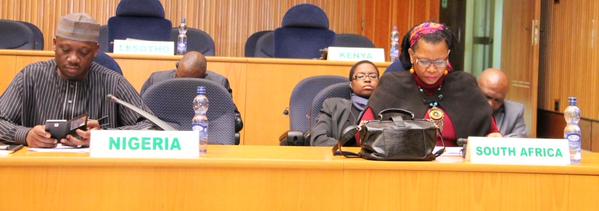
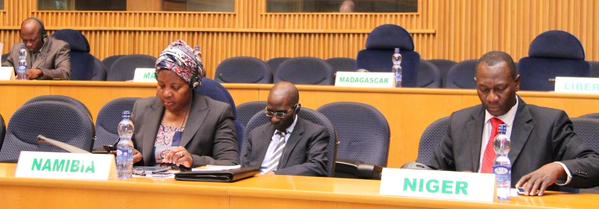
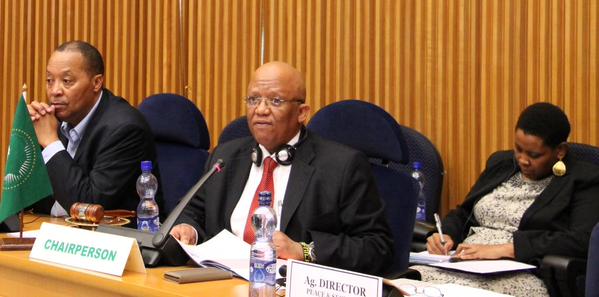

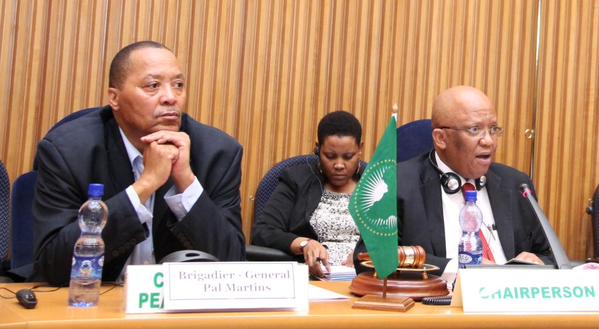
The Peace and Security Council (PSC) of the African Union (AU), at its 528th meeting on 30 July 2015, held an open session on Post-Conflict Reconstruction and Development (PCRD).
Council took note of the presentation on PCRD made by the retired Brigadier-General Joel George Martins, Executive Director of Pax Africa. Council also took note of statements made by the representatives of Regional Economic Communities and Regional Mechanisms for Prevention, Management and Resolution (RECs/MRs), namely the Economic Community of West African States (ECOWAS) and the Common Market for Eastern and Southern Africa (COMESA), as well as of the United States of America and of the European Union.
Council recalled Articles 3(c), 6(e) and 14(1), of the Protocol Relating to the Establishment of the Peace and Security Council of the African Union which provide the basis for the PSC to play an active role in PCRD activities in post conflict situations.
Council also recalled the AU PCRD Policy Framework adopted by the Executive Council in June 2006, in Banjul, The Gambia, and underlined its usefulness as a tool for consolidating peace, prevent relapse of violent conflict and to help address the root causes of conflict. Council recognised the six complementary priority areas in the Policy upon which all PCRD efforts should be developed and sustained, which include security, humanitarian emergency assistance, political governance and transition, socio?economic reconstruction and development, human rights, justice and reconciliation, and women and gender.
Council further recalled paragraph 12 of Decision Assembly/AU/Dec.408(XVIII) adopted at its 18th Ordinary Session, held in Addis Ababa from 30 to 31 January 2012, in which it stressed the need for renewed efforts towards post-conflict reconstruction and development in order to consolidate peace where it has been achieved.
Council stressed the principles of national and local ownership as well as inclusivity, particularly, of women and the youth in PCRD activities. Council also stressed the importance of ensuring that all PCRD support is based on country-specific contexts and needs. Council cited the linkage between human rights, national reconciliation, justice, and rule of law, Security Sector Reform (SSR) as well as Disarmament, Demobilization and Reintegration (DDR) as important factors to the success of PCRD activities.
Council highlighted the importance for the Regional Economic Communities (RECs) and Regional Mechanisms for Conflict Prevention, Management and Resolution (RMs) to be given a PCRD mandate with a view to enabling them to spearhead the implementation of PCRD activities. Council also underscored the need for the development of a database of African PCRD Experts for ensuring that AU Liaison Offices have the requisite capacity to undertake or assist in PCRD activities. Council underscored the need for ensuring coordination and coherence of PCRD efforts amongst all actors involved in PCRD activities in order to avoid duplication of efforts and to rationalize the use of available resources. To this extent, Council called for close coordination between the AU, RECs/RMs and the United Nations Peace Building Commission on PCRD activities in post-conflict countries in Africa.
Council stressed the need to resuscitate the Ministerial Committee on PCRD, operationalize the PSC Sub-Committee on PCRD, and to accelerate efforts towards the creation of the Inter-Departmental Task Force on PCRD, with a view to enhancing the implementation of the AU PCRD Policy. Council called upon the AU to assume an oversight role on the implementation, monitoring and evaluation of all PCRD activities in Africa and, within this context, requested the AU Commission to relocate the PCRD Unit from the Peace and Security Department, to the Office of the Chairperson of the Commission.
Council emphasized the need to expedite efforts to finalize the establishment of the AU PCRD Centre.
Council welcomed the launch of the African Solidarity Initiative (ASI) on 13 July 2012, which provided an opportunity for the mobilization, from within the continent, of support for African countries emerging from conflicts, consolidate and expand intra-African co-operation and mutual self-help, in line with the AU Policy on Post-Conflict Reconstruction and Development. Council requested that that the activities of the ASI should be expanded to include all African countries emerging from conflict.
Council stressed the importance of sustainable funding for PCRD activities and called for the establishment of an African PCRD Fund, building on the ASI and African Solidarity Conference. In this context, Council called for a follow-up to the pledges made during the African Solidarity Conference and further called for enhanced collaboration with the African Private Sector, as well as other international partners.
Council underlined the need to strengthen the AU’s conflict prevention mechanisms and the importance of holistic, comprehensive and all-inclusive peace agreements which will create conducive conditions for addressing the root causes of the conflicts from which the countries will be emerging with a view to more effectively preventing relapses.
Posted by Limi Mohammed

We use cookies on our website and mobile app to improve content display and overall user experience. The cookies we use do not store personally identifiable information nor can they harm your computer.
We intend to provide you with the right knowledge on-demand at the right time and in the appropriate format to ensure that you engage the African Union constructively in your specific role.
If you have any questions please contact directly PSD web Administrator at shashlm@africa-union.org
COMMENTS
PDF Version
 Press release: The 528th meeting of the AU Peace and Security Council: an open session on Post-Conflict Reconstruction and Development (PCRD) [Download ...]
Building an African
Narrative Towards
2063